If your home inspection report noted the presence of Transite ductwork in a concrete slab, you likely have questions about what this means for your home’s air quality and future maintenance.
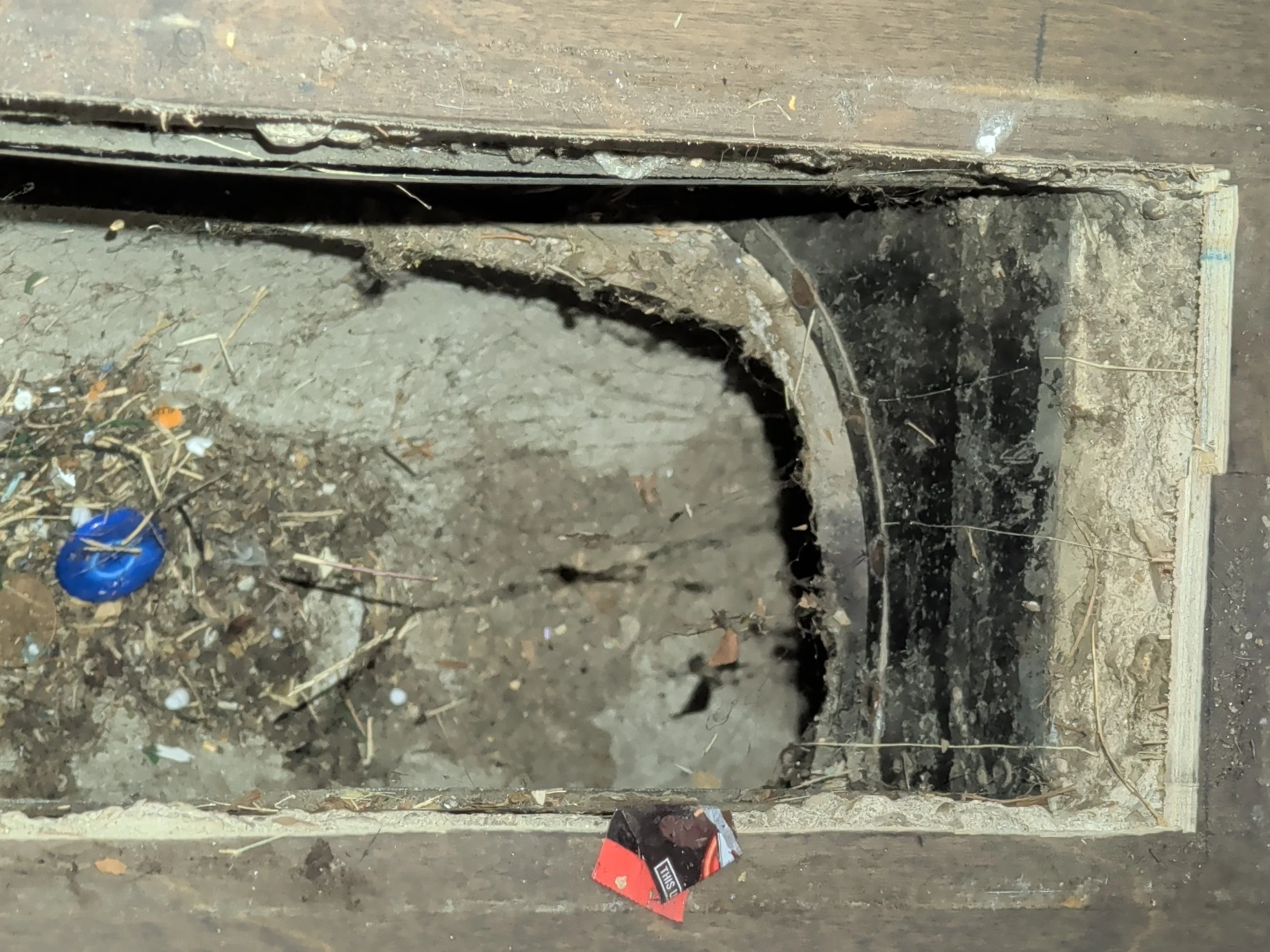
This is a Transite duct in the concrete slab. Notice the rough edges where it was cut.
Transite is an industry term for a specialized type of concrete pipe that was commonly used for underground HVAC ducts from the 1950s through the 1970s. While durable, it requires specific care and understanding from modern homeowners.
What Exactly is Transite?
Transite is a blend of cement and asbestos fibers. It was highly favored at the time because it was strong, didn't rust like metal when buried, and was excellent at handling heating and cooling air distribution.
As long as Transite ductwork remains intact, undisturbed, and dry, it generally poses no immediate health hazard. The asbestos fibers are tightly bound within the concrete matrix. Please keep in mind that as home inspectors we are not equipped to view the majority of the ductwork.
The Challenges of Sub-Slab Transite Ducts
Over decades of service, underground ducts face unique environmental stressors that can cause the material to degrade:
Water Intrusion: High water tables, heavy rains, or poor exterior drainage can cause water to seep into the ducts. Grading, and drainage issues are common with slab on grade homes containing Transite ductwork.
Material Softening: Constant exposure to moisture causes the concrete matrix to slowly leach and soften, which can compromise the structural strength of the pipe.
Fiber Release Risk: If the inner walls of the pipe begin to delaminate, flake, or collapse, there is a risk that asbestos fibers could become airborne and enter the home's breathing air when the fan runs.
The 3 Best Ways to Deal with Slab Transite Ducts
If you own a home with Transite ductwork, or are considering purchasing one you typically have three main pathways to manage or resolve the issue:
1. Evaluation & Continuous Monitoring (The Baseline Approach)
If the ducts are currently dry, clean, and structurally sound, you do not necessarily need to rip them out.
Action: Hire a specialized HVAC or environmental professional to perform a video camera scope of the lines. This checks for standing water, breaches, or collapsing walls.
Maintenance: Ensure your home’s exterior grading slopes away from the foundation and keep gutters clean to prevent water from pooling near the home’s perimeter.
2. Duct Rehabilitation & Duct Encapsulation (The Preventative Fix)
If the Transite is showing early signs of aging or light flaking, but is still structurally intact, it can often be repaired from the inside out.
Action: Specialized contractors can apply a thick, rubberized epoxy or polymer coating directly to the inside of the ducts. This process completely seals (encapsulates) the transite material, locking down any potential loose fibers and creating a seamless, water-resistant barrier.
3. Abandonment & Overhead Redirection (The Permanent Solution)
If a video scope reveals that the transite ducts are collapsing, severely deteriorated, or chronically filling with water, sealing or cleaning them is no longer an option.
Action: The safest and most permanent solution is to completely fill the old slab ducts with concrete slurry to seal them forever. A licensed HVAC contractor will then install a brand-new duct system routed through the attic, drop-ceilings, or upper walls.
The Bottom Line
Finding Transite ductwork isn't a reason to walk away from a great home, but it is a reason to do your homework. Start with a professional video scope to understand the current condition of the lines, and consult with a licensed environmental or HVAC specialist to choose the best path forward for your property.
Henry “Sonny” Toman
1st American Home Inspections
443-388-2410
Serving our neighbors in:
Anne Arundel, Howard, Montgomery, Prince George's, and Baltimore Counties.