Discover how balanced attic ventilation protects your roof deck, prevents winter ice dams, and lowers summer AC bills in Central Maryland homes. Learn why mixing vent types often backfires.
Fireplaces, Stoves, and Inserts: The Ultimate Homeowner Guide to Efficiency, Safety, and Maintenance
With the leaves changing color, now is the perfect time to talk hearth safety and efficiency.
Nothing beats the comfort of a crackling fire on a cold night, but not all hearth appliances heat your home the same way. If you are buying a house with an existing fireplace, planning an upgrade, or just looking to cut down on winter heating bills, understanding how traditional fireplaces, freestanding stoves, and inserts differ in heat output, safety, and maintenance is essential for your family and your wallet.
1. Traditional Masonry Fireplaces: Ambiance Over Efficiency
For generations, open brick or stone masonry fireplaces were the centerpiece of the American home. While unmatched in charm and visual appeal, traditional fireplaces are built for atmosphere, not serious home heating.
How They Work
Open fireplaces draw air from the room to fuel the fire. Heat radiates into the living space directly from the open flames and back wall bricks.
Efficiency & Heat Output
Heating Efficiency: 10% to 15%
The "Draft Effect": Because an open fireplace chimney pulls massive volumes of warm room air up and out of the house, it creates a vacuum effect. Cold outside air gets drawn into surrounding rooms through doors and windows. In many cases, an open fireplace leaves the rest of the house colder than before you lit it.
Maintenance & Safety Requirements
Ash Management: Don't scoop the firebox down to bare brick every time. I recommend that you leave a 1 to 2 inch ash bed. It actually insulates the grate and reflects heat back into the fire.
Firebrick & Mortar Repair: Routinely check the firebox walls for cracked bricks or loose mortar joints.
Flue & Damper Care: Verify the throat damper opens fully before lighting a fire and seals tightly when shut to prevent winter air loss. Don’t close it until the fire is completely extinguished.
Mantel & Trim Clearances: Keep wooden mantels and decorative trim at a safe distance from the firebox opening. General building codes (NFPA 211) require combustible trim to be placed at least 6 inches away from the masonry opening, with deeper mantels (projecting more than 1-1/2 inches) requiring up to 12 inches or more of clearance above the opening to prevent heat damage or fire hazards.
2. Freestanding Stoves: Serious Heat and Blackout Protection
Freestanding stoves, fueled by cordwood, wood pellets, or gas are self contained heating appliances that sit out in the room on legs or a pedestal. They represent one of the most cost effective ways to heat large areas of your home.
How They Work
Stoves feature heavy cast iron or steel body construction with tightly sealed doors. Air intake dampers allow you to regulate airflow, control combustion rates, and extend burn times for up to 8–12 hours on a single load of fuel. This is an art learned over time, but well worth the effort.
Efficiency & Heat Output
Heating Efficiency: 60% – 80%+
Radiant Heat: Because all four sides and top surfaces are exposed to the room air, stoves radiate clean, intense heat 360 degrees around the unit.
Power Outage Backup: Non-catalytic and catalytic wood stoves require zero electricity, making them an unbeatable backup heating option during severe winter storms and utility outages.
Pellet Stoves: Require a small electrical draw (~100W) for the feed motor and fan, but can easily run off an indoor 1000Wh Portable Battery Generator during power outages.
Maintenance & Care Requirements
Gasket Seals & Air Leaks: Inspect door glass and perimeter fiberglass rope gaskets annually. Worn, loose, or missing gaskets allow unmetered air into the firebox and may cause uncontrolled fires, over firing that can warp internal metal parts, rapid fuel consumption, and potential smoke leakage into the living space. Gaskets are one of the most common defects I flag on inspections. Run the simple dollar bill test: shut a dollar bill in the door; if it pulls out with zero resistance, your gasket isn't sealing and you're pulling in uncontrolled air.
Connector Pipe: Inspect the stove pipe connections seasonally for corrosion, loose joints, or creosote buildup.
Pellet/Gas Servicing: Vacuum hopper dust, clean burn pots, and service auger motors or gas ignition pilots annually. You can learn how on YouTube.
3. Fireplace Inserts: Turning a Drafty Fireplace Into a Heating Powerhouse
If your home has an open masonry fireplace that blows cold air into the living room, a fireplace insert is the single best retrofit solution available. I liked mine so much, I still have calluses from chopping wood!
How They Work
A fireplace insert is an engineered, heavy duty steel or cast iron stove box designed specifically to slide directly into an existing masonry or zero-clearance firebox opening. The unit connects directly to a continuous, flexible stainless steel flue liner run all the way up the original chimney. When properly installed they have an excellent safety record.
Efficiency & Heat Output
High Heating Efficiency: Delivers 65% to 80% heat efficiency. This is a massive upgrade over an open masonry fireplace.
Radiant & Convective Heating: Heat radiates off the front faceplate while room air circulates through a heating chamber built around the internal firebox.
Optional Blower Fans: While many modern inserts feature electric blowers to force warm air deeper into the room, non-blower models still deliver strong, continuous heat through natural convection and radiation.
Maintenance & Care Requirements
Blower Motor Cleaning: Dust and pet hair accumulate on lower blower fan blades quickly; clean the blower cage prior to every heating season.
Flue Liner Sweeping: Ensure a certified sweep cleans the stainless steel liner using poly brushes designed specifically for stainless steel. This is critical to maintain safe operation.
Shrouds & Clearances: Keep surrounding decorative mantels, wood trim, and sidewalls clear of the high radiant heat produced by the insert. While general building codes (NFPA 211) require a minimum 6-inch clearance from the opening to combustible trim (and up to 12+ inches for deep mantels), insert manufacturer specs always take precedence. Always check the insert's metal rating plate or installation manual for specific clearances measured from the insert door, faceplate, or shroud.
Fireplace vs. Stove vs. Insert: Quick Comparison
Open Masonry Fireplace
Primary Heat Type: Low Radiant Heat
Heating Efficiency: 10% to 15%
Power Outage Operation: Yes (Low Heat)
Installation Requirement: Full Masonry Chimney & Firebox
Primary Benefit: Aesthetics & Ambiance
Freestanding Wood / Pellet Stove
Primary Heat Type: High Radiant + Convection
Heating Efficiency: 60% to 85%
Power Outage Operation: Yes (Wood) / Pellet Stoves Require A Battery Backup
Installation Requirement: Hearth Pad + Class-A Chimney / Vent Pipe
Primary Benefit: Maximum Heat Output & Off-Grid Utility
Fireplace Insert
Primary Heat Type: High Radiant + Convection (Blower Optional)
Heating Efficiency: 65% to 80%
Power Outage Operation: Yes, wood inserts heat naturally; blower needs power if equipped
Installation Requirement: Existing Firebox + Stainless Steel Flue Liner
Primary Benefit: Converts Inefficient Hearth into High-Output Heater
Essential Safety & Maintenance Gear Every Hearth Owner Needs
To keep your fuel-burning appliance operating safely and prevent flue fires, invest in these basic homeowner tools:
1. Fuel Safety & Efficiency
Digital Wood Moisture Meter: If you burn wood that isn't seasoned below 20% moisture, you're not just wasting energy, you're creating the wet, sticky creosote buildup that keeps chimney sweeps in business. Split a log and check the center with a cheap moisture meter before tossing it on the pile. This is really important if you are purchasing the wood at the last minute.
Magnetic Stove Pipe Thermometer: Keep your wood stove operating in the sweet spot between 300°F and 500°F. A Magnetic Chimney Thermometer alerts you if your fire is idling too cool (causing creosote) or running too hot (risking a chimney fire). This really is a must have for safety.
2. Hearth Safety & Ash Disposal
Heavy-Duty Ash Bucket with Lid: Hot coals buried in ash can stay live for days. Never use paper bags or plastic containers. Use a double bottomed Galvanized Steel Ash Bucket with Tight Fitting Lid set on non-combustible flooring.
Heat-Resistant Hearth Gloves: Protect your hands and forearms when loading logs or adjusting hot dampers with Insulated Leather Hearth Gloves.
Chimney Fire Extinguisher Stick: In the event of a sudden flue fire, a Chimfex Chimney Fire Suppressant Stick extinguishes chimney fires in seconds by suffocating the oxygen supply inside the flue. It is infinitely cleaner and safer than discharging a room ruining dry chemical fire extinguisher. I was very thankful that I had one on hand when my son turned on the whole house exhaust fan and it started pulling smoke into our home. I didn’t know what was happening at the time, but that Chimfex stick put out the fire immediately.
How to Use It in an Emergency:
Twist & Scratch: Remove the protective caps and scratch the exposed end across the igniter cap, just like lighting a highway flare.
Place in Firebox: Place the ignited stick on the floor of the hearth or firebox, beside or behind the active fire. Try to avoid tossing it directly into high flames if you can, but get it inside quickly. Keeping at least two sticks on hand is a smart move in case of a severe flue fire.
Close Doors & Damper: Immediately close the glass doors or fireplace screen and shut the air intake damper to trap the oxygen-starving chemical smoke inside.
Note: While it produces a dense, sulfurous smoke, the mess remains completely confined inside the appliance as long as the doors are closed right away. Soot and light residue wipe off glass and hearth stone with basic stove cleaner once cooled.
3. Indoor Air Monitoring & Power Backup
CO & Smoke Alarms on Every Floor: Fuel-burning appliances produce invisible, odorless carbon monoxide if venting gets blocked, cracked, or backdrafts. Install combination smoke and carbon monoxide alarms on every level of your home, outside sleeping areas, and near hearth appliances. This is especially effective when the alarms are interconnected.
Low Level CO Monitor with Digital Display (Inspector Recommendation): Standard CO alarms are built to meet minimum safety codes and only sound when carbon monoxide reaches dangerously high levels (70+ ppm). By the time a standard alarm sounds, occupants may already experience headaches, nausea, or unconsciousness. A Low Level Carbon Monoxide Monitor displays real time readings starting at just 5 to 10 ppm, alerting you to subtle venting leaks or draft issues long before they reach life-threatening levels.
Portable Power Station (For Pellet Stoves And Optional Blower Fans): Unlike wood stoves, pellet stoves require power (~100W continuous) to feed fuel and run blowers. A Pure Sine Wave Portable Power Station (1000Wh+) keeps your pellet stove running for 8 to 12 hours during a power outage.
Professional Inspections: The NFPA 211 Standard
While regular ash clearing and glass cleaning can be handled by homeowners, internal flue systems require specialized evaluation.
In accordance with NFPA 211 (National Fire Protection Association) standards, a Level 2 chimney inspection by a qualified chimney specialist is strongly recommended prior to purchasing any home with a fuel burning fireplace, stove, or insert.
As a home inspector, I can only report on what's visible from the hearth floor and the top of the roof. I can't see around a 45 degree flue elbow. That's why I always recommend a chimney specialist run a chimney camera up the flue before you close on the home.
Annual Checklist for Homeowners
Schedule an annual sweep and inspection before lighting the first fire of autumn.
Replace door gasket ropes every 2-4 years or whenever paper slides easily through a closed door seal.
Restock Chimfex Sticks if needed.
Test carbon monoxide and smoke detectors monthly.
Store seasoned firewood covered and raised off the ground, at least 30 feet away from home exterior walls.
Henry “Sonny” Toman
1st American Home Inspections
443-388-2410
Serving our neighbors in:
Anne Arundel, Howard, Montgomery, Prince George's, and Baltimore Counties.
How to Transfer an HVAC Warranty When Buying a Home (Step-by-Step Guide)
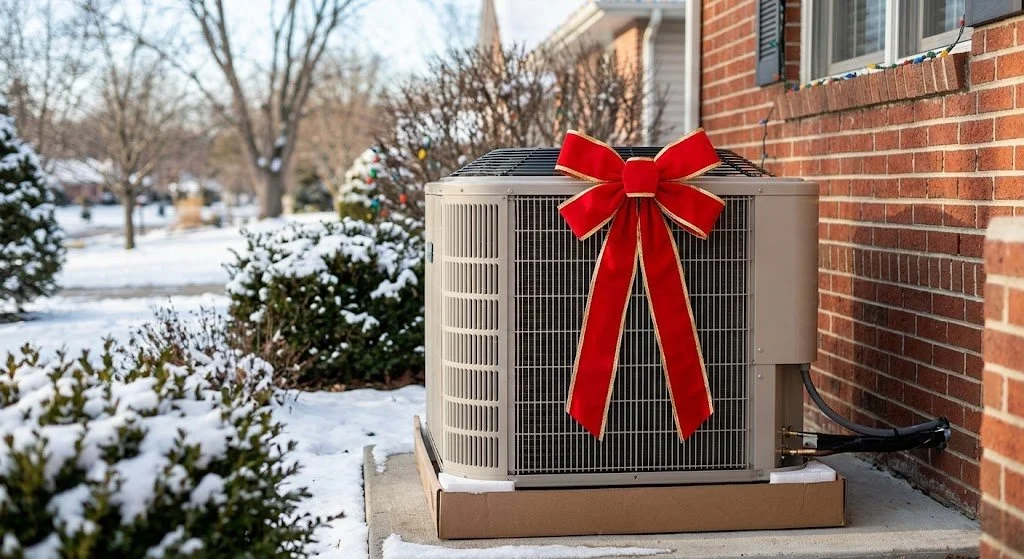
Understanding Foundation Problems: Common Causes, Cracks, and Settlement
If your home inspection report recently flagged a foundation crack or signs of settlement, it’s completely normal to feel a bit anxious. The foundation is the literal bedrock of your home, and "foundation issues" can sound incredibly expensive.
However, not all foundation movement is a structural catastrophe. To help you understand exactly what is happening beneath your feet, let’s look at why foundations move, what causes the damage, and when you actually need to worry.
1. Soil: The Real Culprit Behind Foundation Movement
Most people think foundation problems are caused by poor concrete. In reality, the concrete is usually just responding to the soil beneath it. Different types of soil behave differently, but clay soil is the most notorious offender due to its expansive nature:
The Shrink-Swell Cycle: When clay soil gets wet, it expands with immense force, pushing upward against your foundation. When it dries out, it shrinks and contracts, leaving hollow voids beneath the concrete. This constant movement places severe stress on the foundation.
Disturbed vs. Undisturbed Earth: By code, a home’s concrete footings should always be poured directly onto undisturbed, natural earth to ensure a solid baseline. However, if a excavation crew accidentally digs a foundation trench too deep and tries to backfill it with loose, uncompacted dirt before pouring the concrete, trouble is brewing. Over time, the immense weight of the house will compress that disturbed soil, causing the foundation to sink unevenly.
2. Water Management (The #1 Practical Cause)
Water is a foundation's best friend and worst enemy. It isn't just about heavy rains; it’s about uneven moisture distribution around the perimeter of your home.
The Critical Role of Soil Grading
Slope it or Soak it: The ground immediately surrounding your home should always slope away from the foundation walls—a concept known as positive grading. Ideally, you want a drop of at least 6 inches within the first 10 feet of the foundation.
When a yard has negative grading (sloping toward the house) or flat grading (causing water to pool next to the concrete), the ground acts like a funnel. All that rainwater gets directed straight down your foundation walls, saturating the soil, accelerating the shrink-swell cycle, and putting immense hydrostatic pressure on your home's structural footprint. Fixing improper grading is often the cheapest and most effective preventative maintenance a homeowner can do. This won’t repair any existing cracks, but it will reduce future cracking.
Types of Foundations: It’s Not All Poured Concrete
While many modern homes feature poured concrete walls, older homes throughout Maryland utilize completely different materials. The type of foundation your home has dictates how it responds to stress:
Poured Concrete: A single, continuous structure. When it cracks, the crack goes entirely through the wall.
Cinder or Concrete Block (CMU): Built with individual blocks held together by mortar joints. Instead of cracking cleanly, block foundations tend to crack along the mortar lines (known as stair-step cracking) or bow inward horizontally along a middle seam when subjected to heavy lateral soil pressure.
Historic Mortared Stone or Brick: Commonly found in older, historic homes. These foundations are designed to "breathe" and can absorb a small amount of moisture. Over time, the lime mortar naturally degrades, causing stones to loosen, mortar to crumble, or the walls to weep water. This is usually a masonry maintenance issue rather than a structural failure. However, if the mortar is completely washed out or individual stones are beginning to shift and bulge inward, it moves from a maintenance task to a structural concern that requires stabilization.
3. Foundation Cracks: What Do They Mean?
During an inspection, we look at the direction and size of concrete cracks to determine the underlying cause:
Vertical Cracks
What it Usually Means: Typically caused by standard concrete shrinkage as it cured shortly after construction.
Severity Level: Low (Usually cosmetic, but should be sealed against moisture to prevent future leaks).
Diagonal Cracks
What it Usually Means: Caused by differential settlement (one part of the house is sinking faster than the part next to it). On concrete block walls, this often presents as a distinct stair-step crack following the mortar lines.
Severity Level: Moderate (Requires monitoring; may need stabilization if it continues to widen).
Horizontal Cracks
What it Usually Means: Caused by severe lateral soil pressure (hydrostatic pressure) pushing inward on a foundation wall. On concrete block walls, a horizontal crack typically runs straight through a middle mortar joint, indicating the wall is bowing inward from external soil pressure.
Severity Level: Dependent on Size
Small / Hairline Cracks (Moderate): The structure is stable for now, but you must correct the moisture and grading issues immediately to stop the pressure from worsening, and the cracks from becoming more severe.
Large or Bowing Cracks (High): A major structural concern that requires immediate professional repair or reinforcement.
4. Settlement vs. Heaving
It is important to understand the mechanical difference between how a home settles versus how it lifts:
Foundation Settlement: This occurs when the soil beneath the foundation can no longer support the weight of the structure, causing a portion of the home to sink downward. Signs include sticking doors, windows that won't open, cracked drywall upstairs, and sloping floors. When settlement occurs toward the middle of a foundation wall, it will often express itself as an inverted "V" cracking pattern as the center drops away from the sides.
Foundation Heaving: This is the exact opposite. It occurs when expansive soils or freezing moisture (frost heave) swell upward, forcing the foundation higher than its original position. When heaving occurs toward the middle of a foundation wall, it will typically express itself as a regular "V" cracking pattern as the upward force snaps the center of the wall higher than the ends.
The Bottom Line
Foundations are engineered to handle massive loads, but they cannot withstand unstable soil and uncontrolled water. The absolute best way to protect your foundation is to keep your gutters clean, extend your downspouts at least 5 to 6 feet away from the home, and maintain a positive slope so rainwater drains away from your walls.
If you are reviewing an inspection report and see noted cracks or settlement, don't panic. Use it as a roadmap to address water issues early, or consult a foundation structural specialist to see if stabilization (like underpinning or piering) is required.
Gutter Guards: A Home Inspector’s Guide to What Actually Works
What is the Safest Temperature for Your Home’s Hot Water? (The Scald vs. Bacteria Balance)
If you’ve recently walked through a home inspection with me, you probably noticed me checking the hot water temperature at your fixtures. It’s one of those minor details that many homeowners don't think twice about until they realize that setting the temperature dial on a water heater is actually a high-stakes balancing act.
Set it too high, and you risk severe burns. Set it too low, and you turn your water tank into a breeding ground for dangerous bacteria.
So, what is the practical, safe temperature for heated water in a home? Let’s dive into the data, look at the actual burn times, and help you find the perfect setting for your household.
The Danger Zone: Why 120°F is the Universal Baseline
The U.S. Consumer Product Safety Commission (CPSC) recommends setting residential water heaters to 120°F (49°C). There is a very specific reason this number is the standard: it represents the tipping point for human skin safety.
Take a look at how quickly a hot water burn (scalding) can happen at various temperatures:
Water TemperatureTime Required for a 3rd-Degree Burn150°F1.5 seconds140°F3 seconds130°F30 seconds120°FMore than 5 minutes
As you can see, a mere 10-degree jump from 120°F to 130°F slashes your reaction time from minutes to seconds. For households with young children, the elderly, or anyone with slower physical response times, temperatures above 125°F are an immediate safety hazard.
The Hidden Biological Risk: Legionella
If higher temperatures are so dangerous, why don’t we just turn our water heaters down to 110°F or 115°F?
Because of a nasty bacteria called Legionella, which causes Legionnaires' disease (a severe and sometimes fatal form of pneumonia). Legionella thrives in stagnant, warm water—specifically between 68°F and 113°F.
If your water heater tank sits below 120°F, it isn't hot enough to kill the bacteria. Instead, the tank becomes an incubator. When you take a shower, those bacteria become aerosolized in the mist, and you breathe them straight into your lungs.
The Inspector’s Sweet Spot: 122°F to 130°F
During my home inspections, I typically flag water temperatures that fall outside a practical compromise range of 122°F to 130°F.
While keeping the water around 122°F doesn't instantly flash-kill all bacteria, it stops Legionella from reproducing, while still granting you plenty of reaction time to avoid a sudden scald in the shower.
How to Get the Best of Both Worlds
If you want to completely eliminate the risk of bacterial growth and guarantee your family never gets scalded, there is a gold-standard mechanical solution: A Thermostatic Mixing Valve.
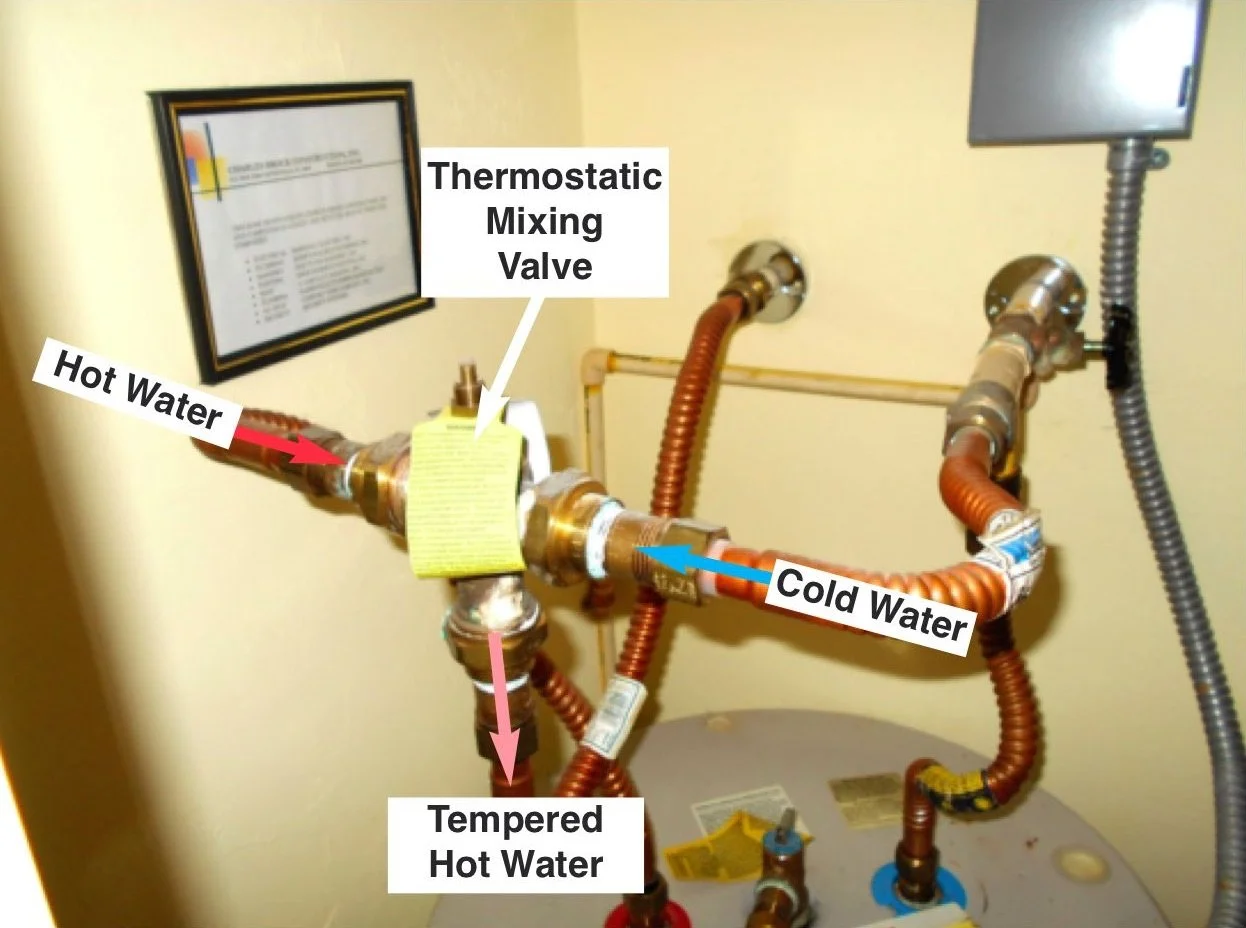
A properly installed thermostatic mixing valve clearly showing how cold water is blended with the hot water line right at the source.
This is a device installed directly at the outlet of your water heater. It allows you to crank your water heater tank up to a bacteria-killing 140°F, but it automatically mixes in a precise amount of cold water right as it leaves the tank. By the time the water travels through your pipes and hits your sinks or showers, it is a perfectly safe 120°F.
What to Do Next
If you suspect your water is running too hot or too cold, you can easily test it yourself. Take a standard kitchen thermometer, run the hot water at your kitchen sink for a minute or two until it tops out, and measure the stream.
If it's over 130°F or under 120°F, it's time to adjust the dial on your water heater tank. (Note: If you have an electric water heater, remember to turn off the breaker before opening the panels to adjust the upper and lower thermostats!)
Have questions about your water heater's age, safety features, or overall performance? Feel free to reach out to me directly or check out our other home maintenance guides.
Henry “Sonny” Toman
1st American Home Inspections
443-388-2410
Serving our neighbors in:
Anne Arundel, Howard, Montgomery, Prince George's, and Baltimore Counties.
What Is Transite Ductwork and How Should You Handle It?
If your home inspection report noted the presence of Transite ductwork in a concrete slab, you likely have questions about what this means for your home’s air quality and future maintenance.
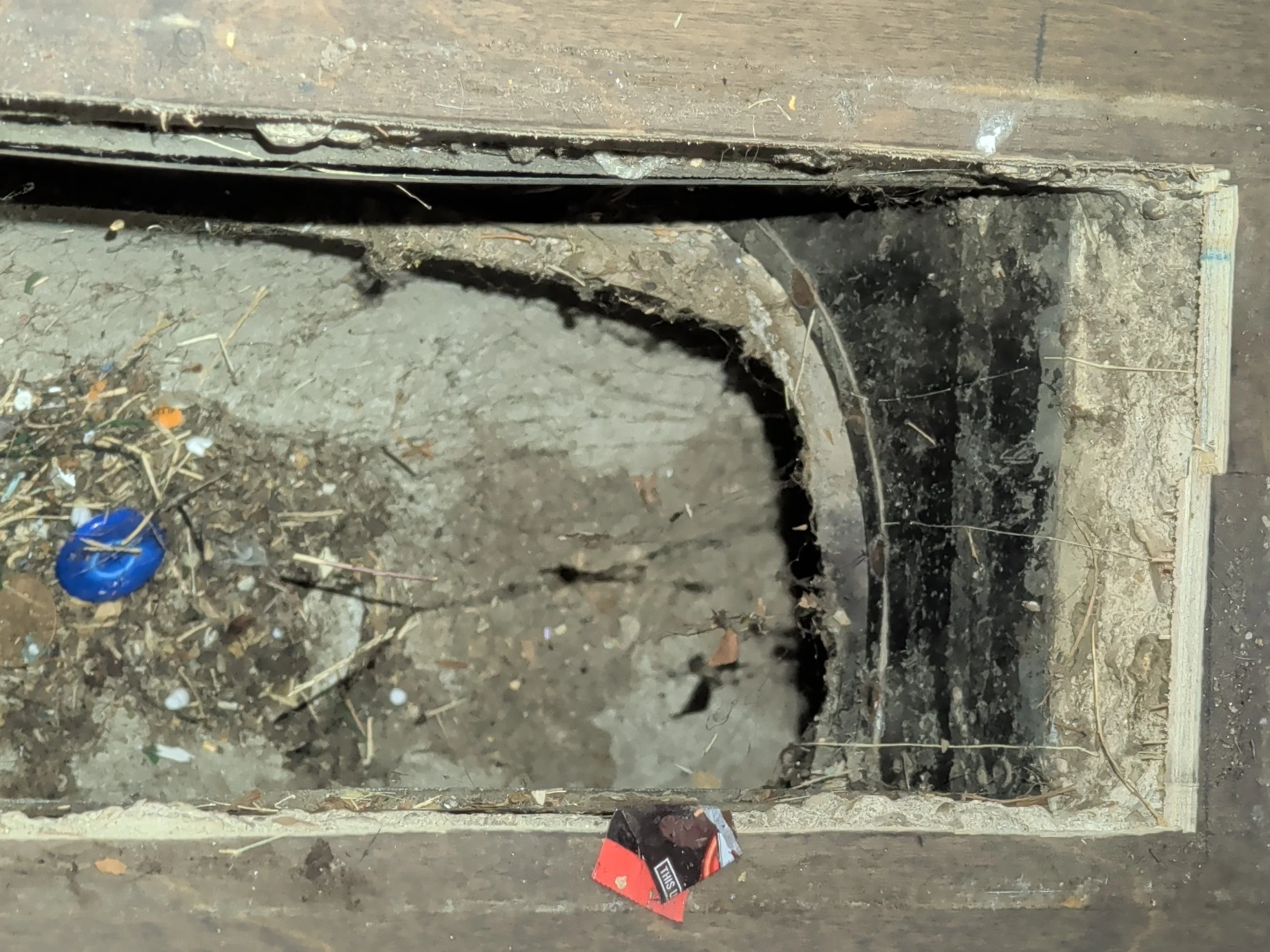
This is a Transite duct in the concrete slab. Notice the rough edges where it was cut.
Transite is an industry term for a specialized type of concrete pipe that was commonly used for underground HVAC ducts from the 1950s through the 1970s. While durable, it requires specific care and understanding from modern homeowners.
What Exactly is Transite?
Transite is a blend of cement and asbestos fibers. It was highly favored at the time because it was strong, didn't rust like metal when buried, and was excellent at handling heating and cooling air distribution.
As long as Transite ductwork remains intact, undisturbed, and dry, it generally poses no immediate health hazard. The asbestos fibers are tightly bound within the concrete matrix. Please keep in mind that as home inspectors we are not equipped to view the majority of the ductwork.
The Challenges of Sub-Slab Transite Ducts
Over decades of service, underground ducts face unique environmental stressors that can cause the material to degrade:
Water Intrusion: High water tables, heavy rains, or poor exterior drainage can cause water to seep into the ducts. Grading, and drainage issues are common with slab on grade homes containing Transite ductwork.
Material Softening: Constant exposure to moisture causes the concrete matrix to slowly leach and soften, which can compromise the structural strength of the pipe.
Fiber Release Risk: If the inner walls of the pipe begin to delaminate, flake, or collapse, there is a risk that asbestos fibers could become airborne and enter the home's breathing air when the fan runs.
The 3 Best Ways to Deal with Slab Transite Ducts
If you own a home with Transite ductwork, or are considering purchasing one you typically have three main pathways to manage or resolve the issue:
1. Evaluation & Continuous Monitoring (The Baseline Approach)
If the ducts are currently dry, clean, and structurally sound, you do not necessarily need to rip them out.
Action: Hire a specialized HVAC or environmental professional to perform a video camera scope of the lines. This checks for standing water, breaches, or collapsing walls.
Maintenance: Ensure your home’s exterior grading slopes away from the foundation and keep gutters clean to prevent water from pooling near the home’s perimeter.
2. Duct Rehabilitation & Duct Encapsulation (The Preventative Fix)
If the Transite is showing early signs of aging or light flaking, but is still structurally intact, it can often be repaired from the inside out.
Action: Specialized contractors can apply a thick, rubberized epoxy or polymer coating directly to the inside of the ducts. This process completely seals (encapsulates) the transite material, locking down any potential loose fibers and creating a seamless, water-resistant barrier.
3. Abandonment & Overhead Redirection (The Permanent Solution)
If a video scope reveals that the transite ducts are collapsing, severely deteriorated, or chronically filling with water, sealing or cleaning them is no longer an option.
Action: The safest and most permanent solution is to completely fill the old slab ducts with concrete slurry to seal them forever. A licensed HVAC contractor will then install a brand-new duct system routed through the attic, drop-ceilings, or upper walls.
The Bottom Line
Finding Transite ductwork isn't a reason to walk away from a great home, but it is a reason to do your homework. Start with a professional video scope to understand the current condition of the lines, and consult with a licensed environmental or HVAC specialist to choose the best path forward for your property.
Henry “Sonny” Toman
1st American Home Inspections
443-388-2410
Serving our neighbors in:
Anne Arundel, Howard, Montgomery, Prince George's, and Baltimore Counties.
The Home Buyer’s Guide to Solar Panels: Benefits, Savings, and Real-World Maintenance
If you are looking at a home with solar panels, it is easy to feel a mix of excitement and confusion. On one hand, the idea of a lower electricity bill is incredibly appealing. On the other hand, you might wonder: How do these things actually save me money? And what kind of maintenance am I on the hook for?
As home inspectors, our goal is to cut through the marketing hype and give you the practical facts. Here is what you need to know about buying a home with an existing solar photovoltaic (PV) system.
1. How the Savings Actually Work
Solar panels don’t just power your electronic devices directly from the sun; they integrate with the local power grid. Here is how the financial benefits break down:
Net Metering: Most residential solar setups utilize a system called net metering. During the middle of the day, your panels will often produce more electricity than your home is actively using. This excess power is sent back into the utility grid, and your electric company gives you a credit for it.
The "Banked" Credits: At night or during cloudy winter days when your panels aren't producing enough power, you draw electricity back from the grid, using up those accumulated credits.
The Bottom Line: Solar panels rarely eliminate an electric bill entirely because most utilities charge a flat monthly connection fee. However, a properly sized system can drastically offset your actual energy usage costs, saving typical homeowners hundreds to thousands of dollars a year.
2. Setting Realistic Expectations (No Over-Promising)
While solar panels are an excellent asset, it is important to understand their boundaries:
Power Outages: A common misconception is that solar panels will keep your lights on during a blackout. Unless the home has a dedicated, expensive backup battery storage system (like a Tesla Powerwall), your solar system will automatically shut off during a power outage. This is a mandatory safety feature designed to prevent your panels from sending electricity down the lines and injuring utility workers who are trying to fix the grid.
Natural Degradation: Solar panels naturally lose a tiny amount of efficiency every year—usually about 0.5\% to 1\%. If you are looking at a system that is 10 or 15 years old, it will produce slightly less power than it did on day one, which is completely normal.
3. Maintenance: What’s Worth Your Money (and What Isn’t)
Solar systems are incredibly resilient because they have no moving parts. However, managing them wisely will save you from unnecessary expenses.
❌ Skip the Professional Cleaning
You will see plenty of companies offering professional solar panel cleaning services, claiming it boosts efficiency. However, university engineering studies show that normal dust and pollen only reduce panel efficiency by a minor 3% to 7%.
Hiring a professional crew usually costs between $150 and $300+. The tiny bump in electricity generation from a cleaning will only save you about $20 to $40 a year. Financially speaking, the math doesn't add up. In most climates, regular rainfall is completely sufficient to keep your panels washed off.
⚠️ Budget for the Inverter
While solar panels can easily last 25 to 30 years (this isn’t a warranty), the inverter (the box usually mounted near your electrical panel that converts solar power into usable household electricity) has a shorter lifespan.
Standard string inverters generally last 10 to 15 years.
If you are buying a home with a 10-year-old system, you should anticipate and budget for an inverter replacement in the near future.
🏠 The "Hidden" Roof Cost
If the roof underneath the solar panels is nearing the end of its lifespan, keep in mind that a solar roofing contractor must be hired to detach and temporarily remove the panels before the roofers can work, and then reinstall them afterward. This process can cost anywhere from $2,000 to $5,000+ depending on the size of the array, so it is crucial to know the age of both the roof and the solar system.
Final Takeaway for Buyers
An existing solar system is a fantastic feature that can provide immediate monthly savings on your energy bills. To protect yourself, always ask the seller for:
The original installation records and age of the system.
Historical production logs (usually accessible via an app like SolarEdge or Enphase) to verify the system is operating normally. Unfortunately the seller may not even be aware of this, or it may not always be available.
Warranty transfer documentation to ensure you are covered if an inverter or panel needs replacement.
Henry “Sonny” Toman
1st American Home Inspections
443-388-2410
Serving our neighbors in:
Anne Arundel, Howard, Montgomery, Prince George's, and Baltimore Counties.
The Most Important $10 Home Maintenance Task: Your HVAC Air Filter
If you’ve recently gone through a home inspection, you’ve probably heard me mention the HVAC air filter. It’s one of those tiny details that is incredibly easy to forget, but neglecting it is the number one cause of premature heating and cooling system failure.
Many homeowners think the air filter is just there to keep the air in the house clean. While it does help trap dust and allergens, its primary job is actually to protect the expensive machinery inside your furnace and air conditioner.
What Happens When a Filter Gets Clogged?
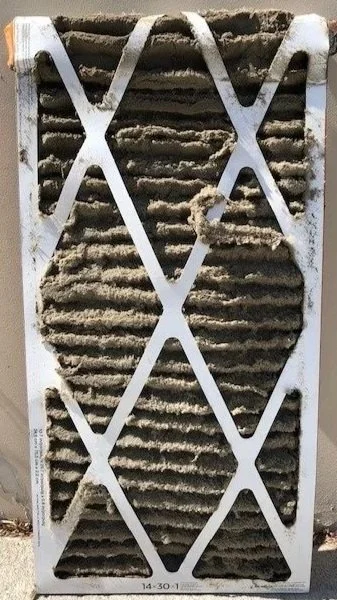
A heavily dust-clogged HVAC filter. When it gets this furry, it completely suffocates your airflow and forces your system to run in overdrive.
Think of your HVAC system like a set of lungs. It needs to breathe in a massive amount of air to heat or cool your home efficiently. When a filter is caked in dust, pet dander, and hair, it acts like a chokehold on the system.
Higher Energy Bills: Your system has to run twice as hard and twice as long just to force air through the blockage, spiking your monthly electric or gas bill.
The "Freeze-Up": In the summer, restricted airflow causes the temperature around your indoor AC coils to drop below freezing. Condensation turns to ice, and suddenly your air conditioner stops blowing cool air entirely.
Blower Motor Burnout: The fan motor inside your system has to work in overdrive to pull air through a dirty filter. Over time, this extra friction burns out the motor—a repair that costs hundreds of dollars.
How Often Should You Actually Change It?
There is no single "right" answer, as it depends entirely on your household. Use these general guidelines:
Suburban/City Homes (No Pets): Every 90 days.
Homes with 1-2 Pets: Every 60 days.
Homes with Multiple Pets or Allergies: Every 30 to 45 days.
Vacation Homes or Single-Occupant Homes: Every 6 months.
Pro-Tip: Don’t just rely on the calendar. If you have a high-traffic household or you've been doing dusty DIY renovations, pull the filter out and look at it once a month. If it looks gray and furry, change it.
3 Quick Tips for First-Time Homeowners
1. Match the Arrow to the Airflow
Every disposable filter has printed arrows on the cardboard frame. These arrows must point in the direction that the air is traveling—which is toward the furnace fan or unit, not away from it. Installing it backward reduces its efficiency and can damage the filter structure.
2. Don’t Over-Filter Your System (The MERV Trap)
It’s tempting to buy the highest-rated "allergen-defense" filter on the shelf (high MERV ratings). However, unless your HVAC system was specifically engineered for tight filters, these thick fiberglass weaves can actually restrict airflow just as badly as a dirty filter. For standard residential systems, a MERV 8 to MERV 11 filter is usually the sweet spot for balancing air filtration and equipment health. In my home I use a MERV 5 filter to minimize airflow restriction, and air purifiers in the rooms I spend the most time in.
3. Take a Photo
When you find the correct size filter during your move-in process (e.g., 16 x 25 x 1), take a picture of the label with your phone. Keep it in a digital folder so you always know exactly what size to grab at the hardware store.
The Bottom Line
Changing a filter takes less than two minutes and costs around $10, but it can save you thousands of dollars in premature HVAC replacements. Make it a habit!
Henry “Sonny” Toman
1st American Home Inspections
443-388-2410
Serving our neighbors in:
Anne Arundel, Howard, Montgomery, Prince George's, and Baltimore Counties.
Why Your AC Can’t Keep Up: Understanding Thermal Loss
Is Your AC Working Hard or Hardly Working?
On a blistering Maryland afternoon, your air conditioner might be screaming at full blast, but the air coming out of your bedroom vent feels... lukewarm. If your system is running constantly but the house isn't cooling down, you aren't necessarily looking at a broken AC unit. You likely have Excessive Thermal Gain.
WHAT IS THERMAL LOSS?
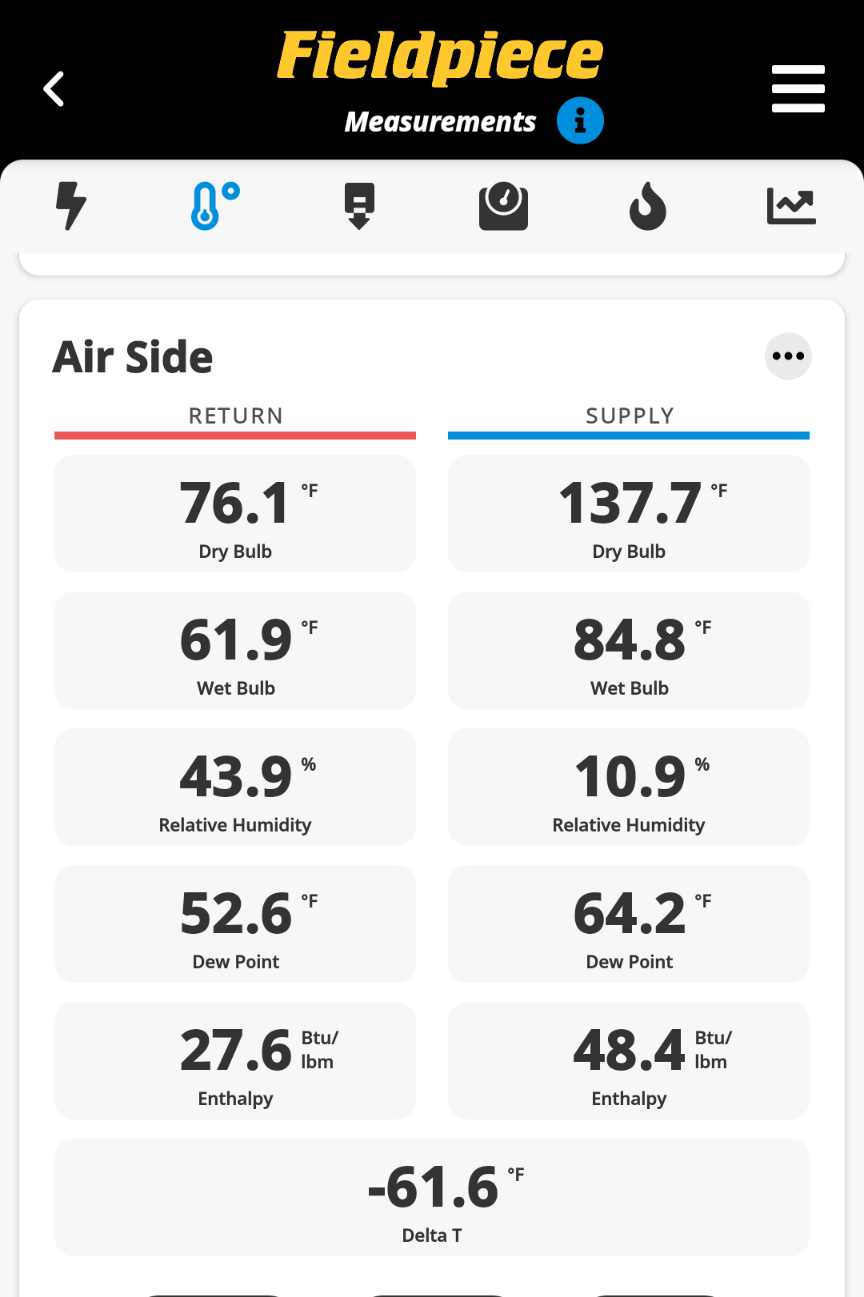
Heating Efficiency Test: Even in winter, thermal loss is a factor. This data shows the warm air losing significant energy as it travels through cold, unconditioned attic spaces before reaching the living areas.
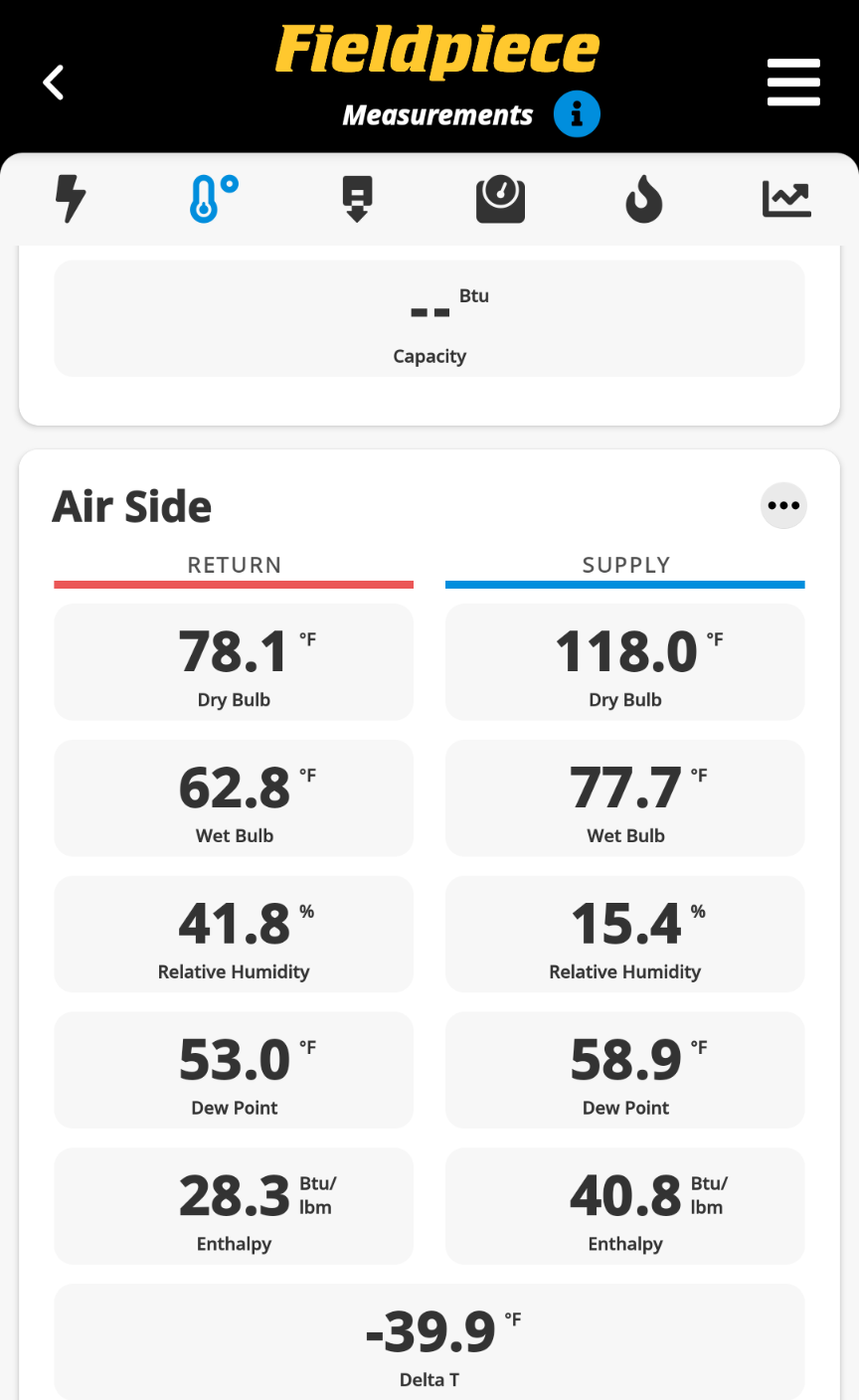
The Delivery: Real-time data showing the air temperature as it enters the living space. By comparing this to the source, we can calculate the exact energy lost.
Think of your ductwork as a "cold-delivery tunnel." If that tunnel runs through a 120-degree attic, the cold air inside starts to warm up before it ever reaches your living room. During your home inspection, we measure the "Temperature Drop." If the air warms up by more than a few degrees on its way through your house, the "cool" is being lost to the unconditioned spaces the ductwork travels through.
PRECISION TOOLS vs. GUESSWORK
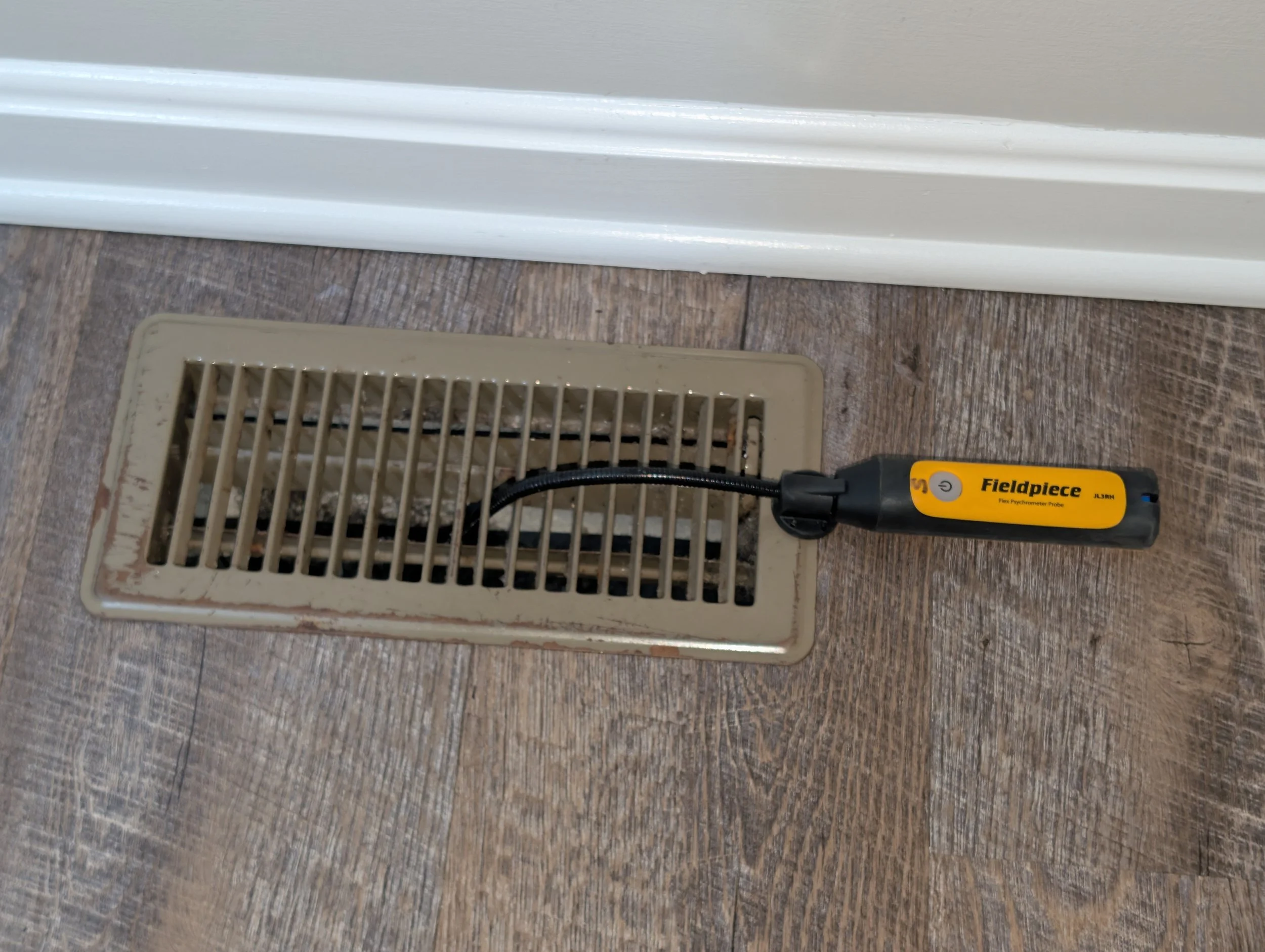
Measuring the ambient air stream at the register with a digital psychrometer. This allows for a precise calculation of thermal loss that standard infrared thermometers simply cannot provide.
Why We Use Professional-Grade Psychrometers During your inspection, we don’t just "feel" the vents. We use a high-precision Digital Psychrometer to calculate the exact temperature rise or drop.
While a standard infrared thermometer only measures the temperature of the plastic vent cover, our psychrometers measure the ambient air stream. This allows us to identify "Energy Bleed" that others might miss. It’s not just about comfort; it’s about verifying that your HVAC system is actually delivering the performance you’re paying for.
Note: While this precision helps us find the 'where' and the 'why' of heat loss, it is important to remember that in many Maryland homes, ductwork is 'built-in.' Our data serves as a roadmap for an HVAC professional to determine the most cost-effective path forward.
THE MAIN CULPRITS:
The "Attic Bake": Many Maryland homes have ductwork in the attic. If those ducts aren't heavily insulated, the attic heat penetrates the metal and warms your air.
Disconnected Ducts: It’s common for duct sections to separate over time. You might be accidentally air-conditioning your attic instead of your master suite.
Leaky Joints: Small gaps at every turn of the pipe let the cold air bleed out into the attic, or other unconditioned spaces.
WHY IT MATTERS TO YOU
Higher Bills: Your AC has to run twice as long to reach the temperature on your thermostat.
Uneven Comfort: The "hot room" in the house will stay hot, no matter how low you turn the dial. This may also have an impact in heating mode.
Equipment Wear: Running your system non-stop leads to premature failure of the compressor and fan motors.
THE “HIDDEN DUCT” REALITY CHECK
In many homes, ductwork is located behind finished drywall or within floor joists. In these cases, accessing the ducts to seal or insulate them is often not cost-effective unless you are already planning a major renovation. If your ducts are 'buried,' the focus shifts from fixing the ducts to managing the airflow.
REALISTIC SOLUTIONS FOR THERMAL LOSS
The "Low-Hanging Fruit": Sealing and insulating ducts in unfinished basements, attics, or crawlspaces. This is where the majority of loss usually occurs.
System Balancing: An HVAC tech can adjust the "dampers" to prioritize airflow to the rooms furthest from the unit.
Internal Sealing: Modern technologies like Aeroseal can seal leaks from the inside of the ductwork without touching your drywall. This can be pricey but worth it if you think you’ve found your dream home.
Supplemental Cooling: Sometimes a mini-split or a ceiling fan is the cheaper, more effective "real world" fix for a room at the end of a long, hot duct run.
Management, Not Miracles: In some older home designs, a small amount of thermal loss is inevitable. Our goal is to ensure you aren't paying for preventable waste.
Henry “Sonny” Toman
1st American Home Inspections
443-388-2410
Serving our neighbors in:
Anne Arundel, Howard, Montgomery, Prince George's, and Baltimore Counties.
The 40-Year Rule: Does Your Electrical Panel Have an Expiration Date?
When we think about home maintenance, we usually think about things we can see: a leaky faucet, a cracked shingle, or a flickering lightbulb. But there is a silent "heart" beating behind a metal door in your garage or basement—your electrical service panel.
While the heavy steel box might look like it could last a century, the high-tech safety components inside are not immortal. In fact, if your home is more than 40 years old, your panel may be operating on "borrowed time."
The Lifespan Benchmark: 30 to 50 Years
Most industry experts, including the National Association of Home Builders (NAHB) and the International Association of Certified Home Inspectors (InterNACHI), agree that the typical service life for a residential electrical panel is between 30 and 50 years.
Why the range? Because an electrical panel isn't just a box; it’s a collection of mechanical switches (breakers) held against copper or aluminum bars (bus bars). Over decades, several factors lead to "component fatigue":
Thermal Fatigue: Every time you turn on a toaster or a vacuum, electricity creates heat. This causes the metal components inside the breaker to expand and contract. Over 40+ years, this "heat cycling" can weaken the spring tension that allows a breaker to trip.
Oxidation and Corrosion: Even in a dry basement, humidity in the air causes microscopic layers of oxidation on the bus bars. This creates resistance, which creates even more heat, leading to a vicious cycle of degradation.
Why "Functional" Doesn't Always Mean "Safe"
The most common pushback we hear during a home inspection is: "But the lights are on, so it’s working fine!"
As home inspectors, we aren't just checking if the power is on; we are checking if the safety mechanism will work when you need it most. An aged breaker is like a 50-year-old seatbelt—it might look perfectly fine while you’re parked, but you don't want to find out it's brittle during a crash. If a breaker "freezes" and fails to trip during a power surge, the wires in your walls can melt, leading to an electrical fire.
Red Flags: When to Call an Electrician
If your home was built in the 1970s or earlier (making your panel 50+ years old), you should watch for these warning signs:
Spongy Breakers: When you flip a breaker, it should have a crisp, "snapping" feel. If it feels soft or spongy, the internal spring is failing.
Crackling Sounds: A humming or clicking sound indicates "arcing," where electricity is jumping across a gap because of a loose or corroded connection.
Dimming Lights: If your lights flicker when the microwave or AC kicks on, your panel may be struggling to distribute the load.
Obsolete Brands: If your panel says Federal Pacific (FPE), Zinsco, or Challenger, these are known safety risks that many insurance companies will no longer cover.
CAN’T WE JUST TEST IF THE BREAKER TRIPS?
A common question we get is: "Can you verify the breaker will actually shut off if there is a problem?" The answer is no, and for a very good reason. A home inspection is a non-invasive, visual evaluation. To "test" a breaker’s trip mechanism, an inspector would have to intentionally overload a circuit or create a short circuit.
Doing this is not only outside the Maryland Standards of Practice, but it is also dangerous. Artificially "tripping" a 50-year-old breaker could cause it to fail permanently, or worse, cause an electrical arc-flash. Because we cannot "stress-test" the internal components, we rely on age, brand history, and visual evidence to determine if a panel is past its prime.
The Bottom Line
If your home’s electrical "heart" is over 40 years old, it has likely exceeded its engineered life expectancy. While it may still be providing power, a proactive evaluation by a licensed electrician is a small price to pay for the peace of mind that comes with a modern, safe electrical system.
Henry “Sonny” Toman
1st American Home Inspections
443-388-2410
Serving our neighbors in:
Anne Arundel, Howard, Montgomery, Prince George's, and Baltimore Counties.
Ready for Heating Season?
I’m up early watering my flowers this morning, and it occurs to me that I will need to swap some of the summer flowers for fall flowers. Yup, it is chilly this morning! It is 64 degrees, not exactly frosty, but you can sense the change of seasons is coming. Hmm, what is on the fall to-do list? Nothing pressing, we still have some warm weather left, but it is time to make the list.
Inspecting Columbia Maryland
Got Hot Water?

Water heaters are a topic of much discussion during a home inspection. Life expectancies are all over the place. Most home inspectors prefer to err on the side of caution, and may suggest the life expectancy is only 10 years. If a home inspector were to average the age of the water heaters inspected, it would probably be a good bit higher than 10 years.
Keeping Your Basement Dry - 1
Moisture intrusion is one of the most common problems found during a home inspection. Dampness, water damage, and mold are consequences of moisture intrusion. The cost of correction can range from a few hundred dollars to thousands of dollars. Usually the determining factor in the cost of correction is the amount of time that the problem has been active.
My New Blog
I meet many home buyers every week that want to take care of their home, but just aren’t sure how to do it. It isn’t like they teach this in school, and there is so much information online designed to sell “stuff” that may or may not be necessary, or practical, so I’ve decided to add some useful information to my website.