Radon Is A Health Risk
Radon is an invisible radioactive gas that has been around since the dawn of time. Radon gas is completely invisible, odorless, and causes roughly 21,000 deaths annually making it a far greater household risk than fires and carbon monoxide combined. The only known health risk associated with Radon is the potential to develop lung cancer. In addition, smoking combined with radon exposure greatly increases the risk for developing lung cancer. Learn more
How does it get into a home?
Radon gas can enter a home wherever it comes into contact with the soil. Unless your home is built on a well ventilated crawlspace, there is a good chance that radon gas is present. No basement? It is still in contact with the soil.

where is it a concern?
Radon gas is a natural byproduct of decaying uranium in Maryland's soil and bedrock. While I have personally found high levels of radon in every area that I have tested (not every home), the EPA categorizes areas into risk zones based on predicted indoor radon levels:
Zone 1 (Highest Risk): Howard County and Baltimore County are designated high-risk areas where average radon levels frequently exceed the EPA action level of 4.0 pCi/L.
Zone 2 (Moderate Risk): Anne Arundel County and Baltimore City fall into moderate-risk zones, but elevated indoor levels are still commonly found across these communities.
Every Home Needs a Test: Radon levels vary dramatically from house to house and block to block. Because dangerous concentrations exist in all zones, the EPA recommends testing every home regardless of geographic location.
Source: U.S. Environmental Protection Agency (EPA)
A Note from the Field:
While the EPA classifies Anne Arundel and Prince George's Counties as Zone 2 (Moderate Risk), my experience testing for radon shows that dangerous radon concentrations above 4.0 pCi/L are routinely found in homes throughout these areas. Because radon levels fluctuate house by house regardless of county lines, testing is the only way to know if a specific home is safe.
Hi-tech radon testing
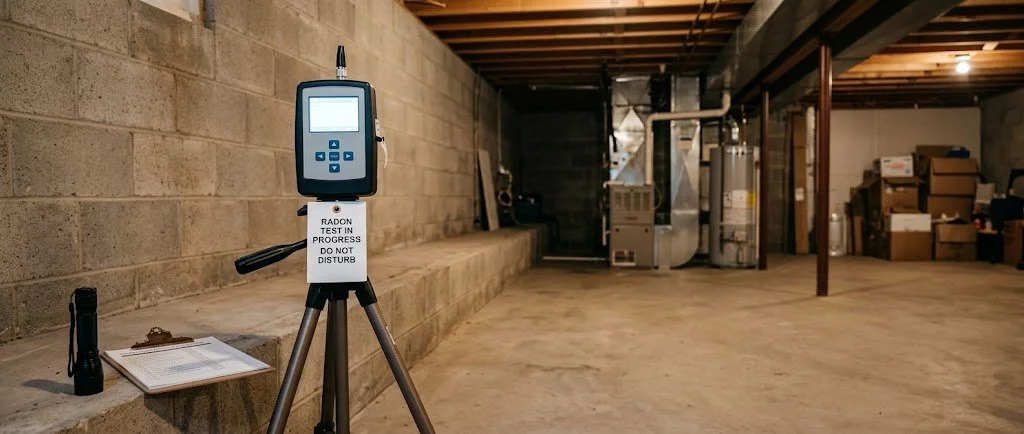
We use state of the art continuous radon monitors.
We follow the Environmental Protection Agency’s standards for monitoring radon.
Our equipment meets or exceeds the EPA’s recommendations.
Our equipment is truly tamper resistant as recommended by the EPA.
We provide results as soon as the test is complete (at least 48 hours after starting the test). A digital report is delivered the same day the test is completed.
In a hurry? We can try to place the equipment 48 hours prior to your home inspection.
Official EPA Radon Guides & Resources
For more detailed federal guidelines and consumer safety information, view the official EPA resources below:
A Citizen's Guide to Radon
This is a complete guide to protecting your family and testing your home.
Home Buyer's and Seller's Guide to Radon
Essential facts for real estate transactions.
Consumer's Guide to Radon Reduction
How radon mitigation systems work if high levels are detected.